Since its foundation in 1968 by Mr Mohamed El Jabri, the group chose to put quality as a core principle among its value system. EL Jabri management, production, and logistics teamed up throughout the years to offer best quality sardines and anchovies and then started integrating various production units, all located in coastal areas to ensure product freshness.
Aware that quality is a priority; the group has put in place its own internal quality-control department and is now meeting international requirements (HACCP, PGQ).
With significant experience in the field, the group has decided in 2006 to move up a gear and give birth to MAPI. The company’s vision relies on traditional sardine-processing methods, constant human asset development programs along with innovative packaging, logistics, and product-tracking solutions. All of these, along with rigor and daily dedication, make up the main ingredients for MAPI export management, allowing us to be among the leaders of the sector with various coastal production units delivering a wide range of products:
Sardine fishing is an ancestral practice in the Moroccan coastline. At the beginning of the 20th century, fish canning started emerging with the opening of several industrial units in the moroccan coastline, with Safi being the city that paved the path for the canning sector in the kingdom in which group El Jabri is finally present with MAPI since 2006
El Jabri Group was created at the hands of Mr Mohamed El Jabri in early 60s and evolved throughout the years to become strong of 14 production units across 6 Moroccan coastal cities, exporting products worldwide.
who chose to put quality as a core principle among its value system. EL Jabri management, production, and logistics teamed up throughout the years to offer best quality sardines and anchovies and then started integrating various production units, all located in coastal areas to ensure product freshness.
Like most of the sector players, the group followed the important demand for canned fish and industrialized its process aiming to level up productivity and provide enough amounts for markets worldwide, yet sacrifying the traditional method. The loss of certain traditional markets made the group aware of the taste-related challenges and the loss of the mediterranean fish gourmet flavor.
Due to those challenges, the group decided to get back to the origins of authentic sardine canning. Back to Safi, where sardine-canning started in Morocco in early 30s, the group acquired a 60-year old canning unit, one of the very few that kept its traditional production method, where MAPI was born in 2006.
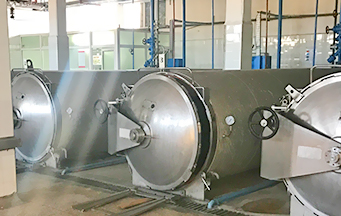
Due to those challenges, the group decided to get back to Safi where it all started in 30s, searching for authentic sardine canning processes and trying to reconnect with traditional fish-processing methods, acquiring a 60-year old production plant that jealously kept the original fish canning recipe, and this is how MAPI came to life in 2006.
MAPI knew how to mix between modernization and tradition. Surely, MAPI follows all new quality regulations and guidelines, either applied by EU or other markets. In addition, in order to keep the original flavor of the fish, MAPI has raised its quality standards above the previously-cited guidelines: no frozen sardines are used in MAPI, only fresh sardines are used, only provided by traditional boats that fish overnight. Also, MAPI avoids machinery, and uses trained labor in the beheading the pleasing shape of the sardine.
With the important demand for canned fish, an industrialization process took place aiming at leveling up productivity and providing enough amounts for markets worldwide. However, the process involved the use of a variety of additives used by almost all players of the sector, inevitably affecting the taste of canned fish and took away its mediterreanean gourmet flavor.
Aware of those challenges, El Jabri group decided to go back to the origins of fish-canning and take benefit from traditional fish processing